A lot of tape-test failures aren’t fat — they’re a bad measurement. Let the tape ride half an inch off your navel or sit at an angle, and your Army body fat number comes back higher than you actually are, so you fail on a reading you never earned. Measuring your abdomen right is the cheapest pass you’ll ever get.
TL;DR: Wrap the tape horizontally at your navel, level all the way around, snug but not digging in. Read it on a normal exhale with your stomach relaxed. Take it twice and average.
Where the tape actually goes
The 2023 one-site method measures exactly one place: your abdomen, at the level of the navel. The tape goes horizontal, parallel to the floor the whole way around, and it’s the same spot for men and women. Against bare skin — not over a shirt, not over a waistband. Stand upright, arms at your sides, looking straight ahead, and let your stomach hang naturally. Use a cloth or fiberglass tape, not a steel one — a metal tape won’t lie flat against the curve of your abdomen, and any gap between the tape and your skin adds length you don’t actually carry.
That single wrap replaced the old multi-point method the Army retired in 2023. The standards article walks through how that one measurement gets turned into a body fat percentage and scored against your age.
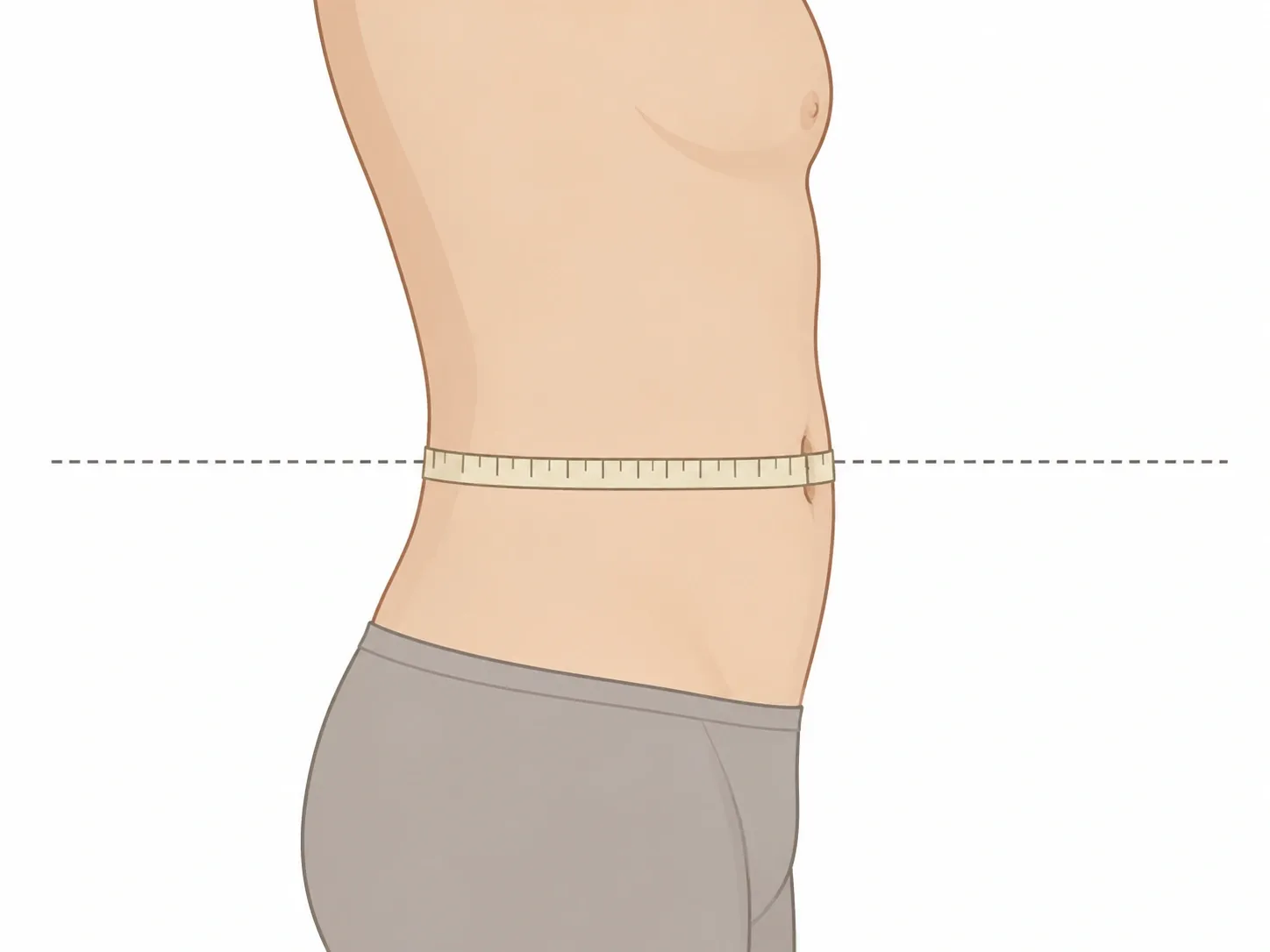
Take the reading on a normal breath out
The abdomen has to be relaxed. Exhale the way you normally would — don’t force the air out, don’t suck your stomach in, and don’t hold your breath at the top. A held breath or a braced core changes the circumference, and graders are trained to spot exactly that.
There’s a reason the standard asks for the relaxed read: it’s also the most accurate one. A stomach you’re actively holding in isn’t the stomach the tape is supposed to measure, and any number you get that way won’t match what happens on test day.
If you’re not sure what relaxed actually feels like, breathe normally for a few cycles and take the reading at the bottom of an ordinary exhale — not a deep one you’ve squeezed out. Once your stomach is loose, the tape shouldn’t move much from breath to breath, and that steady spot is your real number.
One reading isn’t enough — average two or three
A grader never takes a single measurement. AR 600-9 has them measure, remeasure, and — if the two readings disagree — take a third and average the closest two. Do the same thing at home. A single wrap can land a quarter-inch off just from where the tape happened to settle, and a quarter-inch is enough to flip a borderline result.
Round the way your unit does: nearest half-inch, or nearest centimeter on metric. Write each reading down instead of trusting your memory — when two numbers are close it’s tempting to average them in your head, and that’s exactly how a half-inch of wishful thinking sneaks in. Then feed the averaged number in, not your best single try. The calculator on the homepage is only as accurate as the measurement you hand it — an averaged reading beats a one-shot guess every time.
The mistakes that throw the number off
Most bad readings come from a handful of repeat offenders. Each one pushes the result in a predictable direction, so once you know them they’re easy to avoid:
- Tape above or below the navel. Abdominal girth peaks right around the navel, so drifting off it usually reads bigger. Find the navel and keep the tape at that level.
- A tape that isn’t level. Riding higher in back than in front makes the path around longer and the number climbs. Keep it parallel to the floor the whole way; a mirror or a second person catches this fast.
- Measuring over clothing. Even a thin shirt or a waistband adds a quarter to half an inch. Bare skin only.
- Pulling it too tight. Digging the tape into the skin compresses tissue and reads low — which sounds handy right up until a grader takes it firm-but-not-tight and your number jumps. Match the standard: solid contact, no denting.
- Taping right after a big meal. A bloated stomach measures bigger. Give it a few hours.
- Sucking in. The read is supposed to be relaxed, and a held stomach is the first thing a grader watches for.
From tape number to pass or fail
A clean averaged measurement on its own doesn’t tell you much — it has to be scored against your age and sex. The calculator on the homepage takes that abdominal number plus your weight and gives you your body fat percentage, a pass or fail against your limit, and the exact waist that would put you under.
Be straight with yourself about one thing: a measurement you take at home won’t perfectly match a grader’s. Technique differs, and they average their own three readings. So treat your result as a close guide rather than the official verdict. If you land right at the edge, the target-waist number is the useful part — it tells you how much margin you’re working with, and if you come back over, there’s a real path from there.
Most people walk into the tape test having never once practiced the measurement, then trust whatever the grader’s first wrap says. Take it yourself first, take it right, and you’ll know your real number before anyone else does — run it through the calculator and you’ll know exactly how much room you have, or how much you still need to make.